Tired of neutral colors, minimal spaces, and a lack of ornament and decoration?
Color has made its comeback in interiors and surfaces: discover how to bring emotion back into your home by using the two materials that, more than any others, satisfy the desire for color and decorative expression.

The return of color and decoration in the bathroom

After a long period dominated by minimalism, neutral surfaces, and total white or total grey bathrooms, modern bathrooms are finally dressing up again with color, decoration, and personality.


Tiles remain the undisputed protagonists

This shift involves every room in the home, but it finds particularly fertile ground in the bathroom. Here, the undisputed protagonist remains the ceramic tile, which today offers countless possibilities to define the space, make it unique, and tell something about the people who live there. We can now choose between large-format tiles as well as small-format strips, colored ceramic slabs, or richly decorated surfaces.


Decorated ceramic tiles

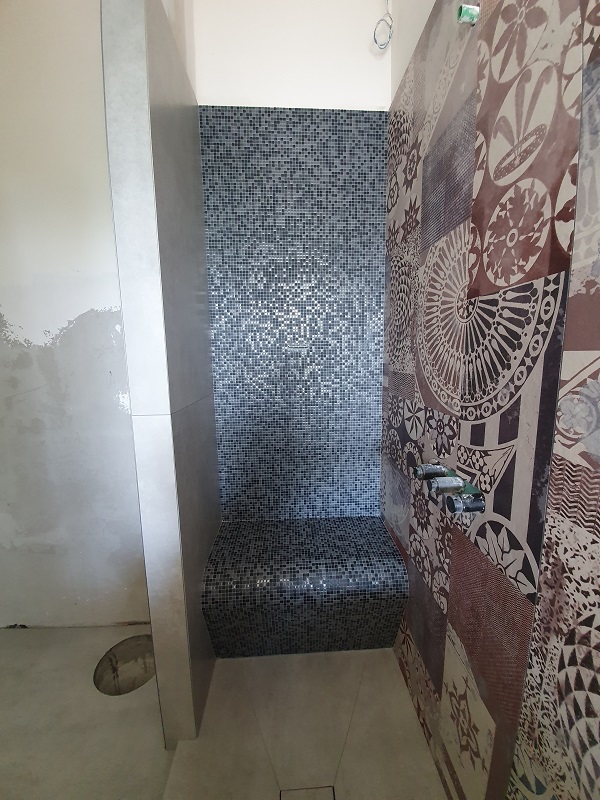
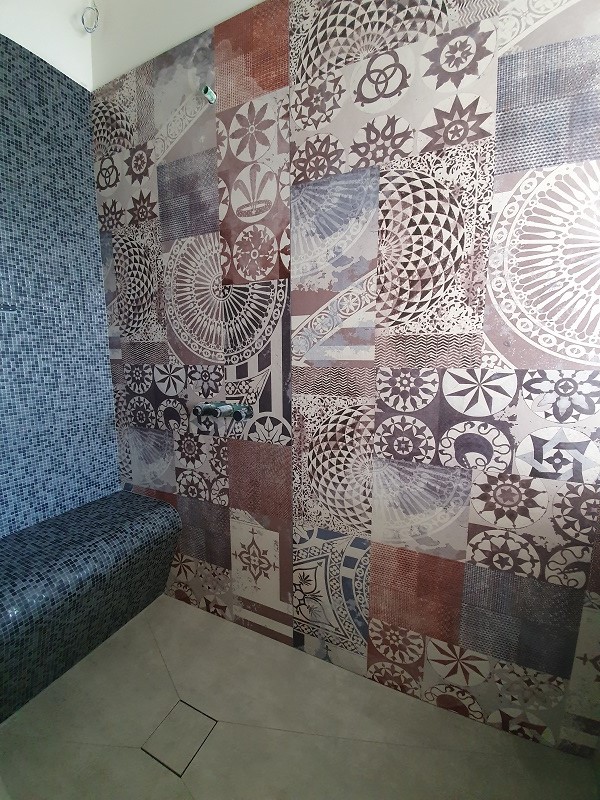
Just think of cement-tile–effect ceramics, back in the spotlight with softer designs and contemporary color palettes; or Amalfi-style majolica tiles, full of light and tradition; or large decorated porcelain slabs, conceived as oversized illustrated panels where technology allows the reproduction of drawings, brushstrokes, and artistic marks.


What are the alternatives to tiles in the bathroom?

Challenging the supremacy of traditional tiles today are two materials with a very high decorative impact: wallpaper and mosaic. Two very different solutions, yet united by a single goal—to decorate, to evoke emotion, and to define character.


Why do we dare more in the bathroom?

More than any other room in the house, the bathroom is the space where we can allow ourselves to be bold. It is a more intimate, enclosed area, often smaller in size, and for this very reason it lends itself perfectly to intense colors, strong decorations, distinctive patterns, and more daring surfaces. Choices that might feel excessive in a living room or kitchen become completely “normal” in the bathroom.
Here we can use bold colors, decorative motifs, and striking patterns to transform the space into an emotional, personal, and strongly identity-driven environment.


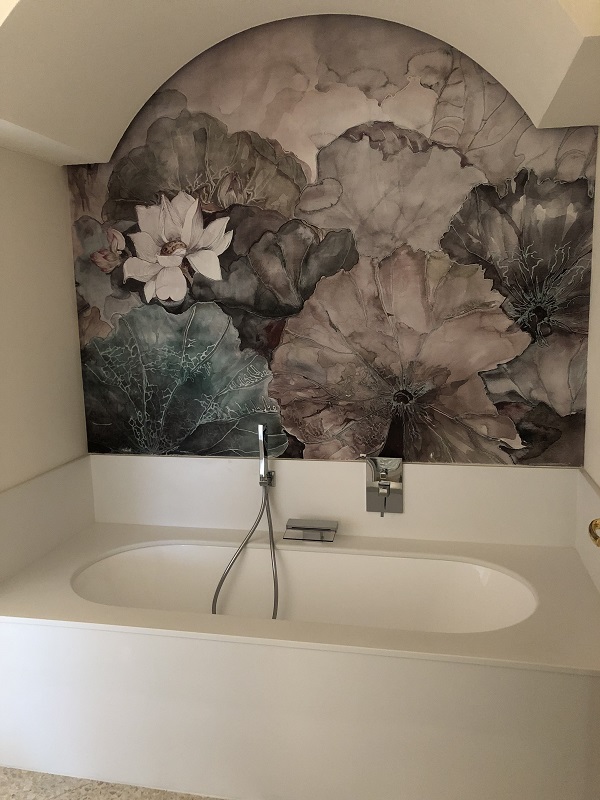
Wallpaper in the bathroom: is it possible?

Wallpaper is making a major comeback: living rooms, bedrooms, shops, bars, and public venues are being transformed with new atmospheres.
But in the bathroom—won’t there be problems?

What we call “paper” is actually a high-performance technical fabric that can even be resin-coated, becoming waterproof and therefore suitable for use in very humid environments.

Wallpaper delivers an immediate scenic effect, with relatively quick installation and a very strong visual impact. It is the ideal choice for those who want a bathroom that breaks the mold—personal, expressive, and highly decorative.


Mosaic in the bathroom

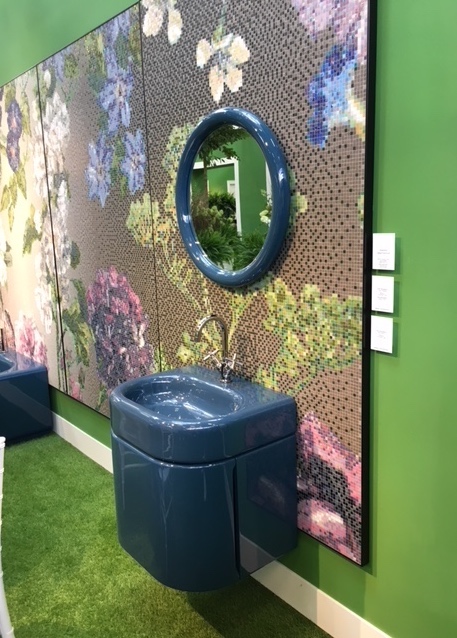
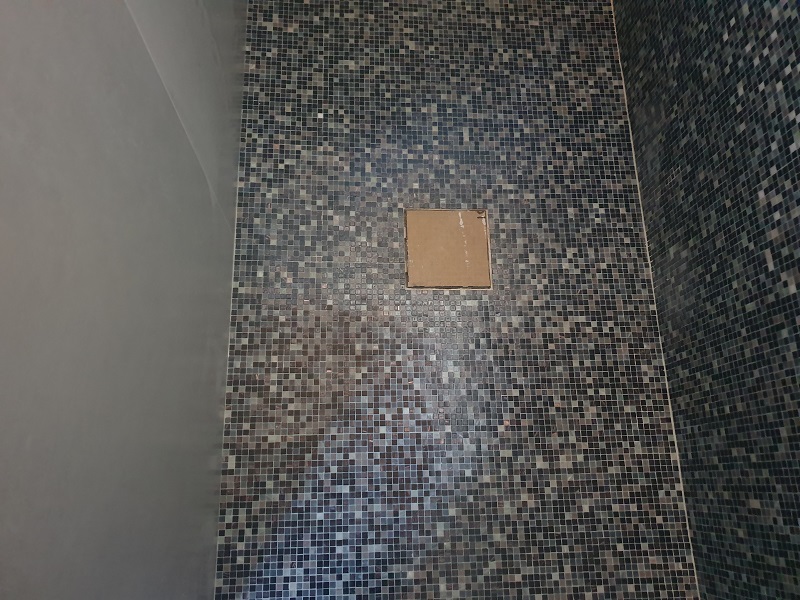
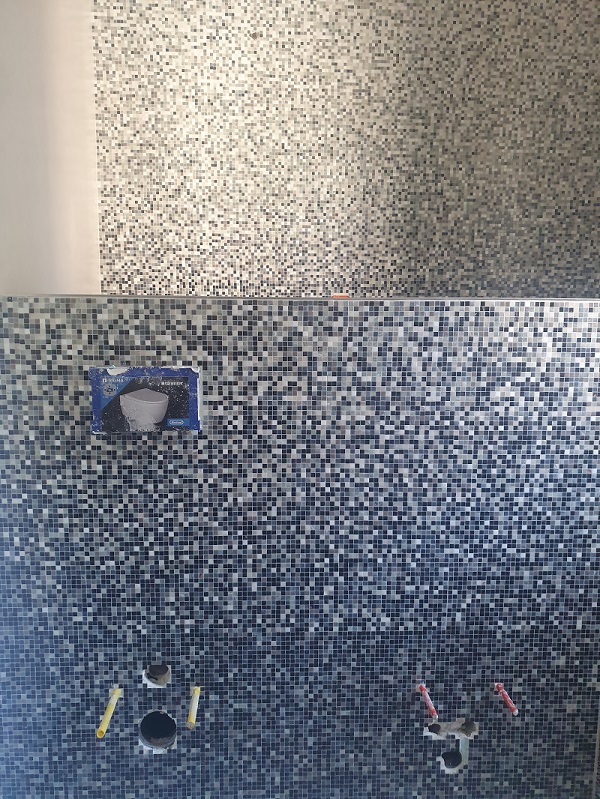
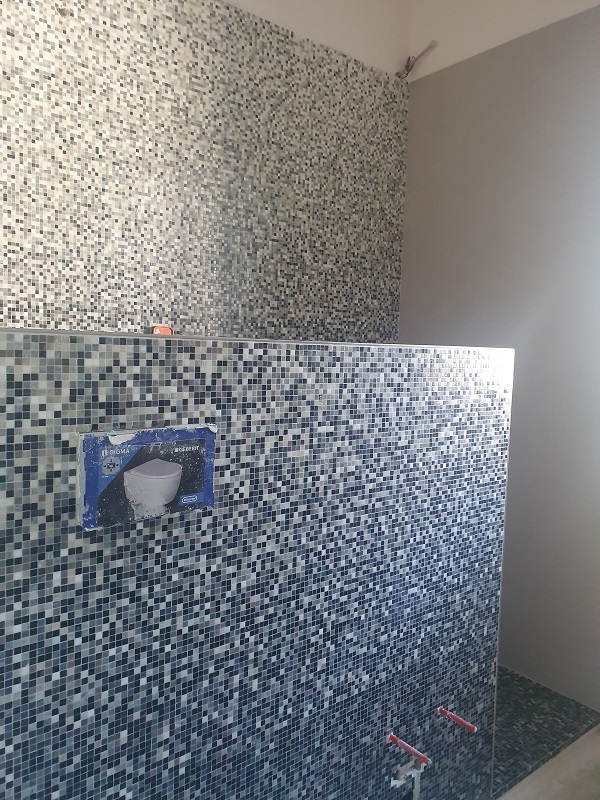
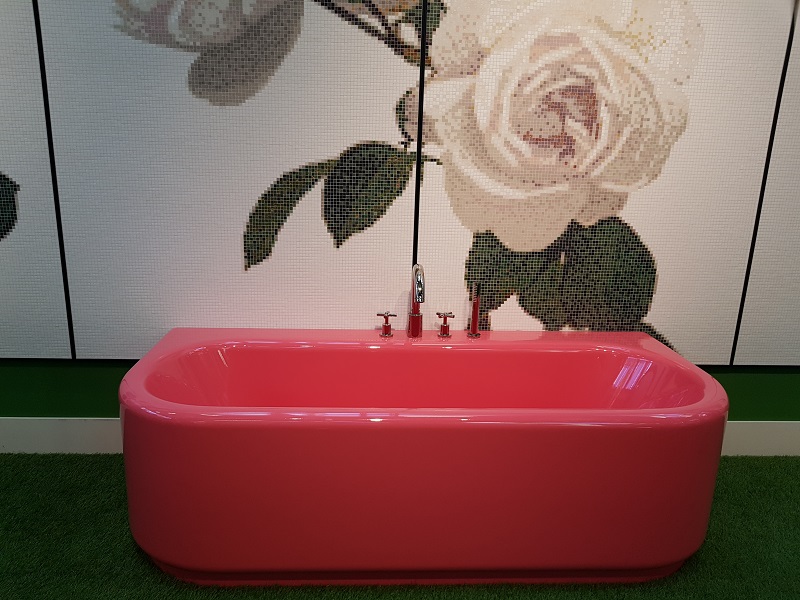
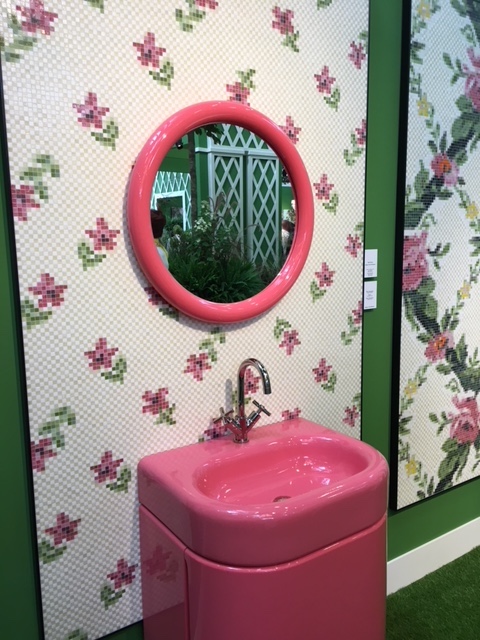
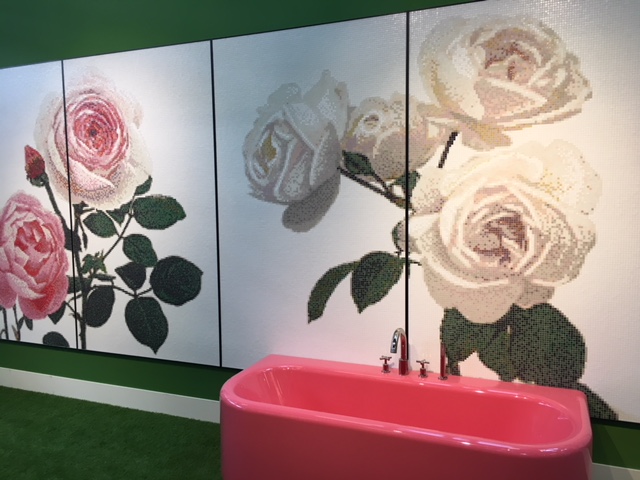
Mosaic, on the other hand, has always been among the most widely used materials for covering bathroom walls and floors. Since Roman times, it has brought decoration, color, and precious or playful scenography into spaces dedicated to wellbeing and body care.

In recent years its use declined, replaced by continuous surfaces and neutral-toned porcelain tiles, but today it is making a strong comeback—more colorful and brilliant than ever.

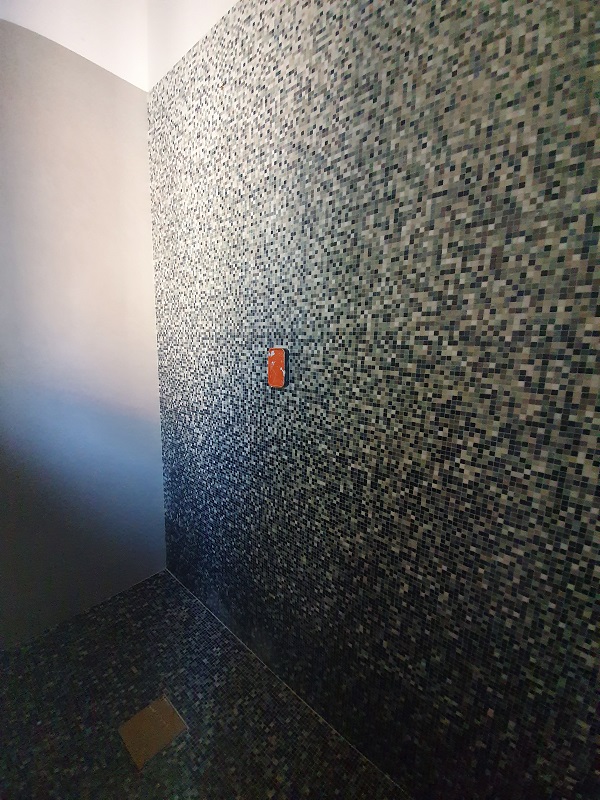
Bisazza mosaic: colors, blends, and patterns


Wallpaper or mosaic in the bathroom?

Both materials are designed to decorate interiors and today present themselves as true bathroom protagonists. But which one is better suited for use in a bathroom? In short, is wallpaper or mosaic the better choice? Let’s take a look at the advantages and disadvantages of both solutions.
 

Comparison between the two materials

Let’s see how these two materials differ in terms of resistance to humidity, durability, maintenance, and cost.

In the bathroom there is humidity — not only in the air

Mosaic is naturally resistant to humidity, while wallpaper (or more accurately, the technical fabric) needs to be waterproofed with a resin if it is intended for use inside the shower area.
However, wallpaper has a critical vulnerability: any moisture present behind the covering, inside the wall itself.

The causes can be different: micro-leaks from pipes, drains, or built-in elements within the wall (such as WC cisterns or concealed mixer bodies), which are often difficult to detect early; interstitial condensation caused by temperature fluctuations, cold walls, or insufficient ventilation; or older walls that were not properly waterproofed.
We have even encountered cases of micro-condensation forming inside poorly insulated manifolds. In all these situations, choosing wallpaper as a wall covering can become problematic, because moisture within the wall causes it to blister and lift.

Durability of mosaic vs wallpaper in the bathroom

Mosaic—especially glass mosaic or glazed mosaic—is one of the most durable solutions available for bathrooms.

It is a material that is:

  • naturally waterproof,
  • resistant to water, steam, and temperature changes,
  • stable in both color and structure over time.

When installed correctly and grouted with epoxy grout, mosaic can easily last for decades without significant deterioration. Historic churches and buildings with mosaic surfaces that are hundreds of years old are clear proof of this longevity.

This durability makes mosaic suitable not only for private residential bathrooms, but also for hotel wellness areas and spas, even when subjected to heavy use. In short, if long-term performance matters as much as aesthetics, mosaic is a choice that guarantees lasting value and beauty.

Cleaning and maintenance

From a maintenance and cleaning perspective, mosaic and wallpaper behave very differently. Mosaic—especially glass or glazed mosaic with epoxy grout—is extremely practical: it can be cleaned with any type of detergent, including acidic cleaners, and it does not fear degreasers or limescale removers. It is also unaffected by abrasion or frequent contact with water.
For these reasons, it is ideal for showers and heavily used bathrooms.

Wallpaper, on the other hand, requires greater care. It should be cleaned only with mild, non-abrasive detergents, avoiding aggressive sponges that could dull or damage the surface. It is therefore a solution that requires a more “gentle” approach to maintenance, suitable for those willing to accept a few extra precautions in exchange for a strong decorative impact.

Price differences between mosaic and wallpaper

Mosaic—especially glass mosaic or products from high-end brands such as Bisazza—has a significantly higher average cost per square meter. Material prices vary widely depending on the collection, format, and color blends, but generally fall within a mid-to-high price range. Installation costs are also substantial, as mosaic requires skilled labor, longer installation times, and great precision, particularly on curved surfaces, niches, or inside showers.
Although prices vary greatly depending on the type of mosaic and it is difficult to define a “standard” installation cost, a minimum estimate of around €200 per square meter should be considered.

Wallpaper designed for humid environments generally has a more affordable material cost while still offering strong decorative impact. Installation is also less expensive, as it is quicker and requires fewer labor hours. However, the additional cost of protective resin coating must be taken into account, as it is essential to make the surface waterproof in wet areas such as showers. In this case, a minimum cost of around €120 per square meter, excluding resin coating, should be considered.

Carta da parati o mosaico?

Aesthetic impact and interaction with light: wallpaper vs mosaic

One of the aspects that most clearly distinguishes wallpaper from mosaic is the way these materials interact with light and, as a result, the aesthetic impact they create within the bathroom space.

Light on the design

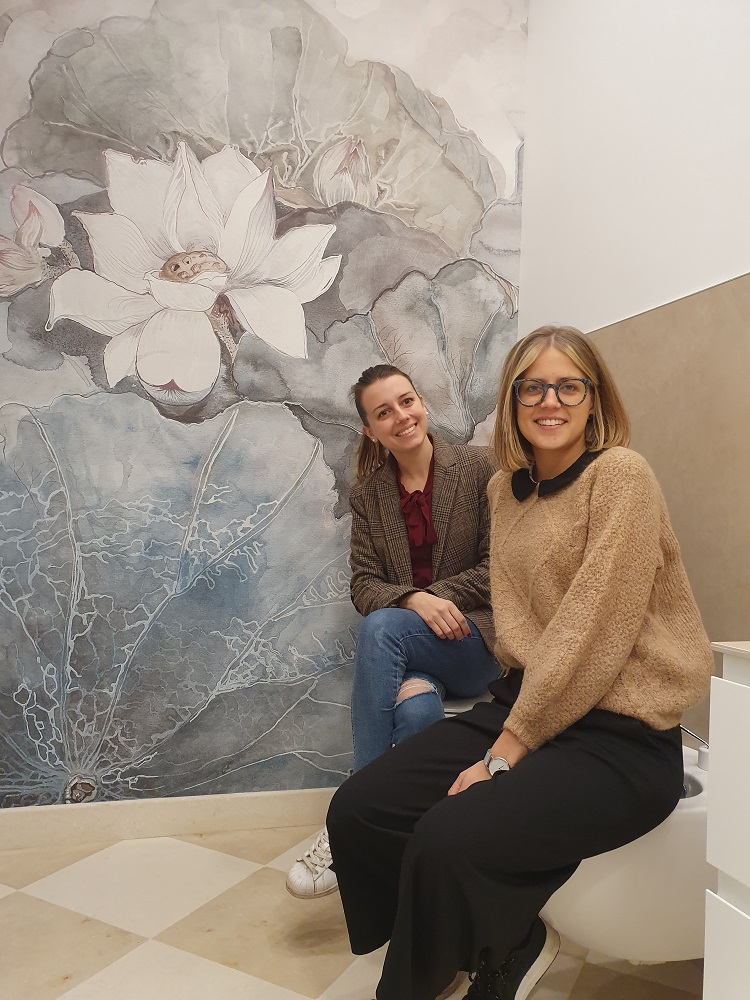
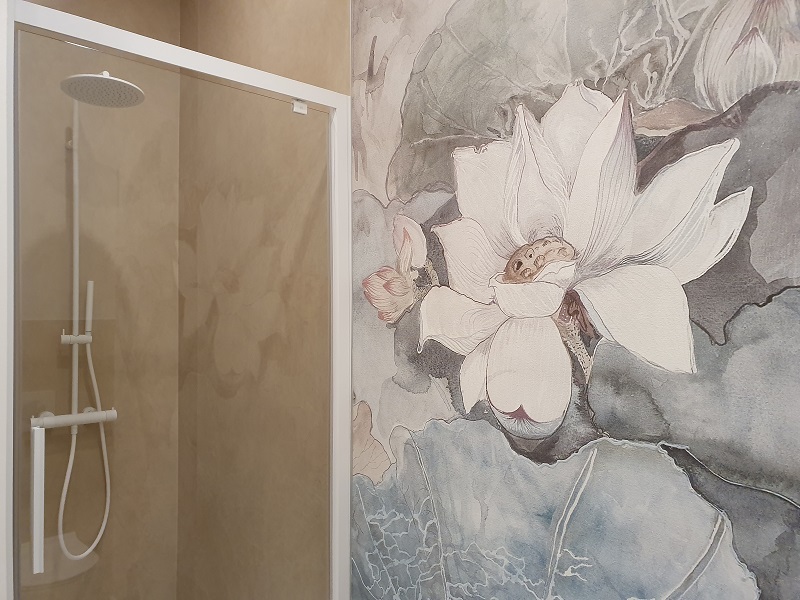
Wallpaper works primarily through imagery. It allows for large-scale subjects, continuous patterns, and pictorial, botanical, or graphic effects that transform the wall into a true narrative surface. In this case, light is absorbed or diffused evenly, enhancing the design without creating strong reflections. The result is an immediate visual impact—highly scenic and emotional—ideal for giving character to a feature wall or for creating a soft, enveloping, decorative atmosphere.

Glass reflections

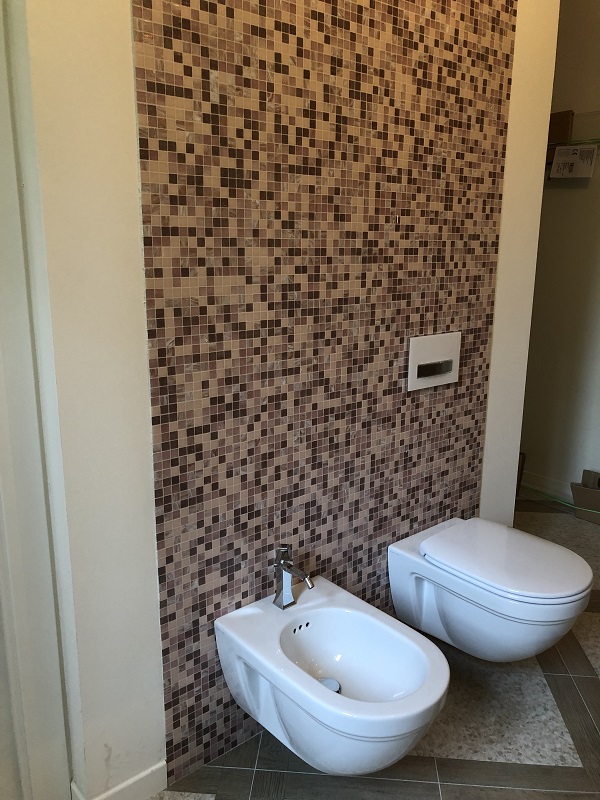
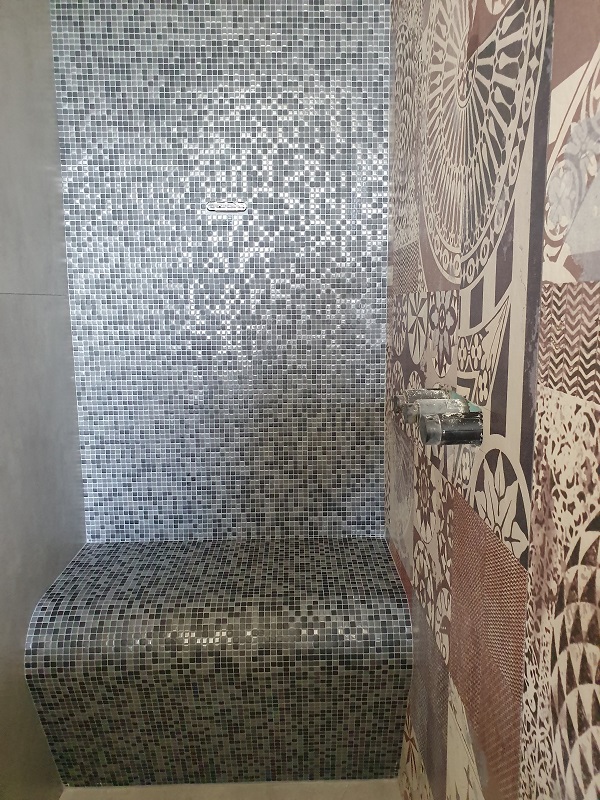
Mosaic, on the other hand, does not tell a story through an image, but through materiality. Each individual tile reflects light differently depending on the angle, creating vibrations, depth, and continuous perceptual changes throughout the day. The surface is never static: it reacts to both natural and artificial light, visually expanding the space and making it more dynamic. The final effect is more tactile, precious, and three-dimensional, capable of enhancing niches, showers, and architectural volumes while creating emotionally engaging reflections within the bathroom.

In short, wallpaper captivates with its immediate visual impact, while mosaic fascinates through its ability to interact with light and add depth to the space. Two different approaches, both valid, each responding to distinct aesthetic sensibilities and design visions.

Carta da parati in un bagno a Lonigo

Project customization: two very different approaches

When it comes to design customization, wallpaper and mosaic follow profoundly different logics.

Perfect designs

Wallpaper allows for a very high level of customization while remaining simple to manage: it is possible to choose subjects, colors, dimensions and, in many cases, create fully bespoke graphics perfectly adapted to the bathroom walls. The result is a continuous surface with perfectly defined lines, uniform colors and sharp designs, free from interruptions or pixelation—just like an artistic print.

Pixels or cut tiles

Mosaic, on the other hand, offers a more complex form of customization. Decorative patterns can be designed digitally, creating “pixelated” images through the use of very small tiles, for example in a 1×1 cm format. Alternatively, one can opt for artisanal craftsmanship, manually cutting the tiles to achieve more fluid and personalized designs. These solutions, however, are very costly and, in any case, mosaic can never guarantee the same line continuity and graphic precision of a printed image.

Two different ways of understanding customization: graphic and immediate for wallpaper, material-driven and artisanal for mosaic.

Bagno con carta da parati e mosaico, a Garda

Adaptability to bathroom geometries

Another key difference between mosaic and wallpaper lies in how well they adapt to the geometries of the bathroom.

Mosaic adapts with ease

Thanks to the small size of its tiles (and the skill of the installer), mosaic adapts very naturally to complex surfaces: niches, curved walls, articulated showers, level changes, differences in height, bathtubs clad both inside and out—no architectural element poses a problem.
Precisely because of this flexibility, mosaic is often the ideal choice in more thoroughly designed bathrooms, where volumes and architectural details become an integral part of the overall design.

Wallpaper requires linear walls

Wallpaper, on the other hand, requires more regular, continuous, and simple surfaces. Complex corners, curves, or multiple interruptions increase the risk of visible joints and make installation more delicate. For this reason, it is better suited to clean, well-defined walls, where it can fully express its decorative potential without technical compromises.

In summary, mosaic offers total geometric flexibility, while wallpaper performs best on surfaces that are clean and carefully controlled from a design standpoint.


Doccia rivestita in mosaico, Lonigo

Perception of value over time: mosaic or wallpaper?

When designing bathroom wall coverings, attention is often focused on the immediate aesthetic effect. However, especially with a medium- to long-term perspective or a future property resale in mind, it is also important to consider how these choices influence the perceived value over time.

From this point of view, mosaic and wallpaper convey very different messages.

Mosaic: lasting value

Mosaic—especially glass mosaic or glazed mosaic—is universally perceived as a high-end material. Its durability, resistance to humidity, and the complexity of its installation communicate quality, solidity, and attention to detail. It is a material that ages well, retains its beauty over time, and contributes to increasing the overall perceived quality of the property.

For those who see their home as an investment, mosaic is a choice that can have a positive impact even at the time of resale, conveying the idea of a well-finished, long-lasting, and premium-level bathroom.

Wallpaper: aesthetic value

Wallpaper, although now a highly evolved technical product, is generally perceived as a more stylistic and decorative choice, closely linked to personal taste and current trends.

Its greatest strength lies in its ability to create emotional and highly scenic environments, but this strong character can appear less neutral to a potential future buyer. When it comes to resale, wallpaper is often seen as an element that can be easily replaced, rather than as a structural value of the property.


Doccia con lastre decorate e seduta in mosaico, Vicenza

Thank you!

Thank you for reading this article comparing different surface solutions.
In our showrooms in Vicenza and Verona, you’ll find many other materials and finishes that can add value to your home. If you come and visit us, we’ll be happy to offer you a free consultation, explaining the different characteristics of each product and working together with you to design your bathrooms, kitchen, and all the surfaces in your home.

All our projects are fully custom-made, carefully tailored to your needs and designed to create unique spaces, conceived exclusively for you and crafted with a truly bespoke approach.

Choose the showroom closest to you and come discover ideas, inspiration, and expert advice for your home.


Prenota la tua consulenza gratuita per scegliere la superficie decorativa di casa tua

Per fissare un appuntamento in una delle nostre sedi a Gambellara, Costo di Arzignano o Sommacampagna, in provincia di Vicenza e Verona, compila il seguente modulo e ti ricontatteremo entro breve.

Dove vuoi fissare l'appuntamento?
Quando?
Mi interessa
Scegli i settori per i quali vuoi chiedere informazioni cliccando su quelli che ti interessano.
Puoi specificare i dettagli della tua richiesta scrivendoli qui sotto:
 
Dichiaro di aver letto l’informativa ex art. 13 dlg 196/03 e di accettare i termini in essa esposti (dettagli). I dati raccolti a seguito della compilazione del presente modulo possono essere utilizzati per il successivo invio di comunicazioni commerciali e di marketing selezionando l’apposita voce. La compilazione del modulo è facoltativa. I dati indicati con un * sono obbligatori per poter effettuare la richiesta e sono necessari per stabilire il contatto richiesto.

Aggiungi un commento

Il contenuto di questo campo è privato e non verrà mostrato pubblicamente.

Testo semplice

  • Nessun tag HTML consentito.
  • Linee e paragrafi vanno a capo automaticamente.
  • Indirizzi web ed indirizzi e-mail diventano automaticamente dei link.
Dichiaro di aver letto l’informativa ex art. 13 dlg 196/03 e di accettare i termini in essa esposti (dettagli). I dati raccolti a seguito della compilazione del presente modulo possono essere utilizzati per rispondere alle richieste degli utenti. Il messaggio inviato verrà pubblicato secondo le norme stabilite nel regolamento del sito. La compilazione del modulo è facoltativa ma per la pubblicazione è necessario inserire un proprio indirizzo email valido.
Selezionando questa casella autorizzo Fratelli Pellizzari S.P.A. ad utilizzare i dati inseriti per il successivo invio di comunicazioni commerciali e di marketing.